
Psychology support
How psychology can help children, families and young people
2 March 2026 · 7 min read
When might psychology be helpful for a child?
Children experience many of the same challenges adults do — anxiety, big emotions, friendship difficulties, low confidence, developmental questions, and the impacts of difficult experiences. The earlier these are recognised and supported, the better the long term outcomes tend to be.
A child doesn't need a formal diagnosis to benefit from psychology. Many families seek psychology support for children who are struggling emotionally, finding school harder than expected, going through a difficult family change, or who have behaviours that are causing stress at home or in the classroom.
Signs that psychology might help include: persistent worry or fearfulness, angry outbursts that are difficult to manage, withdrawal from activities the child previously enjoyed, significant difficulty with transitions or changes in routine, signs of low self esteem, or concerns about the child's development or social skills.
What does psychology with children actually look like?
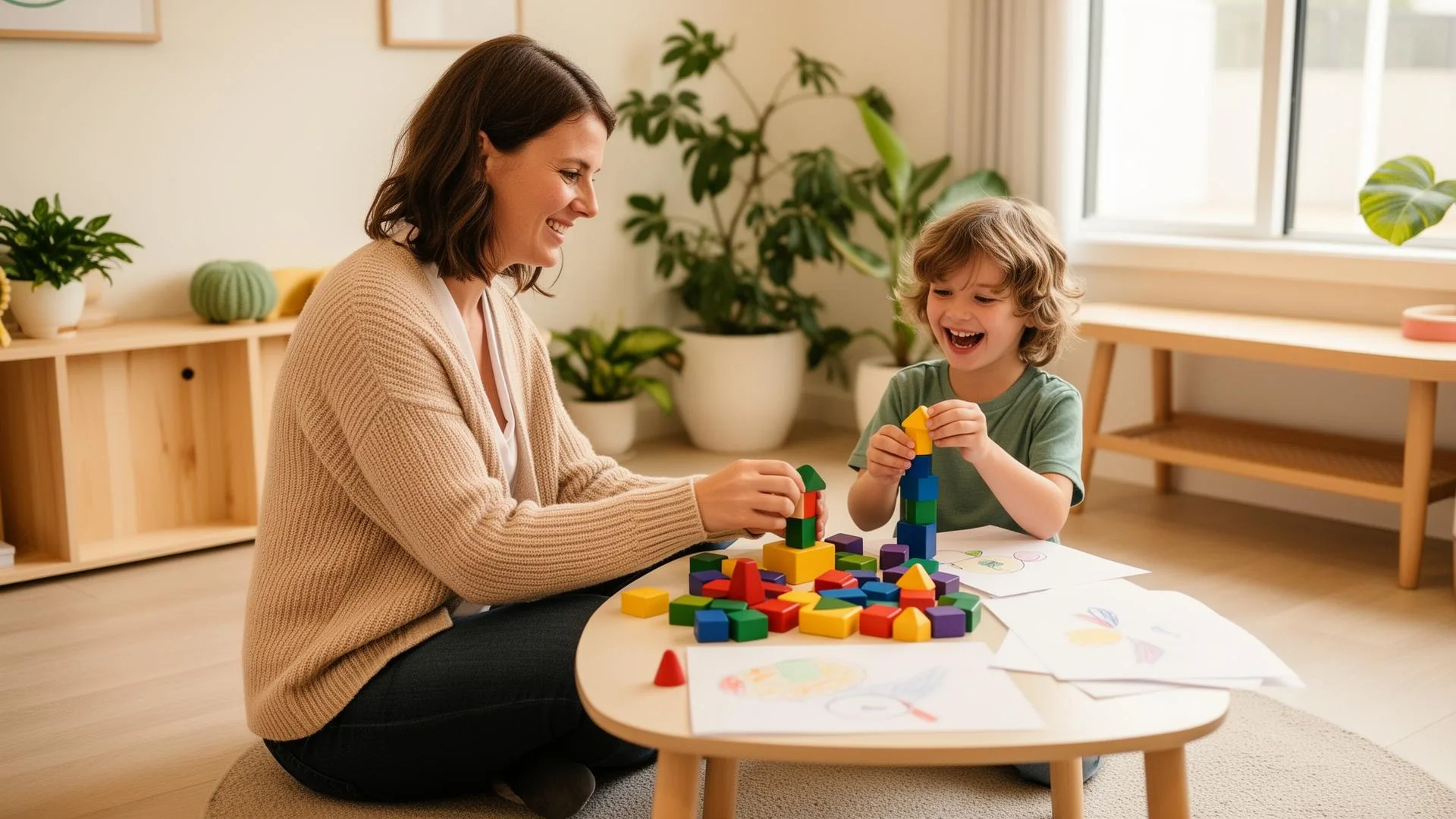
Psychology with children looks quite different from a traditional talking therapy session for adults. For younger children especially, it often involves play based approaches — using games, drawing, storytelling, art and structured activities to help children express themselves and build skills in ways that feel natural and engaging.
With older children and teenagers, sessions tend to involve more direct conversation alongside practical skill building. The psychologist works collaboratively with the young person to understand what's going on, develop their own tools and strategies, and build confidence.
At TLK Care, our psychologists work at the child's pace. There's no pressure to talk about difficult things before the child is ready. Building a trusting relationship is the foundation of everything.
Areas where psychology commonly supports children
Anxiety and worry are among the most common reasons families seek psychology support for children. This can range from separation anxiety in young children to school refusal, social anxiety, or generalised worry in older children and teens. Evidence based approaches like Cognitive Behaviour Therapy (CBT) adapted for children can be very effective.
Behavioural challenges — such as oppositional behaviour, difficulty regulating emotions, or outbursts — are another common focus. Psychology can help children and families understand what's driving the behaviour, develop practical strategies, and improve communication at home.
Psychology also supports children with ADHD, ASD, developmental concerns, trauma, grief and loss, low self esteem, and difficulties with friendships and social skills. Assessments — including functional and psychological assessments — may also be part of the support where NDIS reports are needed.
How families are part of the process
Children don't come to psychology in isolation — their family environment, relationships and routines are central to how they're doing and how they'll progress. Good child psychology always involves parents and carers as partners.
This might look like parent sessions alongside child sessions, practical strategies to use at home, guidance for managing specific situations, or joint sessions where the family practises skills together. It's not about telling parents what they're doing wrong — it's about building everyone's confidence and toolkit together.
At TLK Care, we're family friendly. We take time to understand your child's world, and we communicate clearly about what we're doing and why. You should always feel informed and involved.
Funding options: NDIS, Medicare and private health
Psychology for children can be funded in several ways. Under the NDIS, psychology support may be funded in plans that include 'Improved Daily Living' under Capacity Building. This is more common in plans for children with developmental, behavioural or psychosocial needs.
Medicare provides rebates for children through a GP Mental Health Treatment Plan (up to 10 rebated sessions per calendar year). This requires a referral from your child's GP or paediatrician.
Private health insurance may also cover psychology sessions depending on the level of extras cover. TLK Care accepts a range of health funds — contact us to confirm current arrangements. Self funded sessions are also available.
This article is general information only
The information in this article is intended as a general guide and does not replace professional advice. If you're concerned about your child's mental health or development, please speak with your GP, paediatrician, or contact TLK Care directly. Our team can talk through your situation without pressure and help you understand what options might be right for your family.
If you or someone you know is in crisis, please call Lifeline on 13 11 14, Kids Helpline on 1800 55 1800, or 000 in an emergency. TLK Care's psychology service is not a crisis service.
Frequently asked questions
Talk to TLK Care
If anything in this article resonated, we'd love to hear from you. Send a message any time.
Make an Enquiry